Showing posts with label Critique imitates art. Show all posts

Friday, June 29, 2012

[The Senior Essay] Introduction

Notes for the Reader
Excerpts will be posted unedited; will post my own commentary at the end. All senior essay related posts will be tagged "Batiushka Ioann". Footnotes will appear at the bottom of each excerpt. Prologue here.
Questions, critiques, and reactions of any kind warmly encouraged; I am looking to strengthen and improve. Please remember that this is essentially a hastily written draft.
Writing about theology and Church history as an inexperienced believer for a secular academic audience is harrowing. Don't ignore weaknesses and errors, particularly if they could be interpreted as heretical or blasphemous, but be cognizant of my constraints.

Icon & Iconographer:
Father John of Kronstadt and the Emergence of Sacerdotal Sanctity in Late Nineteenth-Century Russia
I. Introduction

In Dionysius of Fourna’s eighteenth-century iconography manual, one finds a curious instruction: “Draw a monk crucified on a cross, clothed in a tunic and a monk’s hat, barefoot and with his feet nailed to the footrest of the cross; his eyes are closed and his mouth shut. Just above his head is the inscription: ‘Set a watch, O Lord, before my mouth; keep the door of my lips.’”1 He continues, describing the monk’s chest, stomach, legs, and so on, at each point specifying a different prayer (“Create in me a clean heart… Prepare your feet in the Gospel of Peace…”), before explaining how to depict “the all-devouring Hell,” the “Maker of lust,” “Death and the grave,” and finally Christ Himself, above the Cross. “Then write this title: The life of the true monk.”2

It makes for a striking icon, not just because the monk is in place of Christ, but because he is no particular monk at all. He is a cipher, an image to which all monks must aspire (and indeed this icon is most commonly found just outside monastic refectories). More than most this icon highlights the monastic genre of holiness—it is a didactic icon, not meant for veneration of and communion with any individual saint, but for contemplation of and instruction in the ways of a particular model of sanctity.

It is commonly heard among Orthodox Christians that saints are living icons, and in fact it is with this idea that Nadieszda Kizenko begins her recent biography of John Sergiev, the renowned “Father John of Kronstadt”, who was glorified as a saint by the Russian Orthodox Church Abroad in 1964, and by the Russian Orthodox Church herself in 1990.3 He is now remembered best as a sort of latter day defender of “Orthodoxy, autocracy, and nationality,” the reactionary cultural program championed by Tsar Nicholas I and his Minister of Education Sergei Uvarov, so counter to the revolutionary atmosphere that surrounded Father John in the last years before his death in 1908.4 Yet to reduce the complexity of his life to a flat religious conservatism is to ignore his greatest “creation”, as Kizenko puts it: the salvation of his own soul.5

As the son of a sacristan and a graduate of the St Petersburg Theological Academy, Father John was certainly familiar with the communion of saints and the depth and variety of holiness manifest thereby—despite this, he seems to have forged his own path to sanctity, eventually becoming the first parish priest to be venerated by the Russian Church.

This together with his many other idiosyncrasies (matrimonial virginity, living thaumaturgy, ascetic priesthood) has contributed to the idea that he is sui generis, or at least something approaching the founder of a new genre of sanctity. In 1909 Archbishop Nikanor (Kamensky) of Kazan wrote of him that “because people are different now, they need to be acted upon in new ways that are peculiar to them.”6 Even within his own era he was widely recognized as a breaker of established categories of religious life, and the wonder and confusion attendant on his ‘boldness before paradigm’ continues to this day. Yet a historical examination of the evolution of other genres of blessedness reveals that Father John’s trajectory was actually quite in keeping with the meta-tradition of expressive flexibility present in the Church since her founding. Genres of holiness, like icons, are didactic, and evolve, reify, and dissolve in response to the unpredictable contingencies of human society—they are models to be appropriated and internalized by the faithful, not for the sake of orthopraxy, but to guide them towards the fullness of right belief.
- - - - - - - - - -                             
1. Dionysius of Fourna. The 'Painter's Manual' of Dionysius of Fourna. Torrance: Oakwood Publications, 1990.
2. Dionysius of Fourna. The 'Painter's Manual' of Dionysius of Fourna. Torrance: Oakwood Publications, 1990.
3. Kizenko, Nadieszda. A Prodigal Saint: Father John of Kronstadt and the Russian People. University Park: The Pennsylvania State University Press, 2000:1.
4. Pipes, Richard. Russian Conservatism and Its Critics. New Haven: Yale University Press, 2005: 99.
5. Kizenko, Nadieszda. A Prodigal Saint: Father John of Kronstadt and the Russian People. University Park: The Pennsylvania State University Press, 2000:183.
6. Kizenko, Nadieszda. A Prodigal Saint: Father John of Kronstadt and the Russian People. University Park: The Pennsylvania State University Press, 2000: 184.
- - - - - - - - - -
Commentary
These notes serve two main purposes: to remind me what to fix when I go back and edit, and to seek your input on specific issues of concern to me. They will not always be interesting. 


- I hate the title. The paper was already a few days late when I wrapped it up, so I put down the first thing that came to mind and ran it over to the Slavic Department. My working title was "Living Icons, Dead Saints", but that sounded vaguely blasphemous to me.


СТАРЧЕСТВО ДОСТОЙНОЕ ИЗОБРАЖЕНИЕ 
- Came upon the monk icon entirely by happenstance: I was in the stacks rummaging about for books on the rural clergy and found a big gorgeous book almost entirely of full color illustrations of icons and liturgical art. It was in Russian, but I checked it out anyway. I'd flip through it when I wanted a distraction and stopped short the first time I saw the crucified monk. An ingenious friend of mine found a high quality PDF of the entire book online despite not speaking a word of Russian, and weeks later, when I was struggling to think of a hook to get the essay started, the crucified monk came back to me. Read more about this kind of icon here, and email me if you'd like a larger version of the image to the right.

- I usually like to have clever subheadings for each section.

- There are many formatting/style issues. Inconsistencies off the top of my head: whether and where to capitalize words like saint, icon, communion, church, and pronouns referring to God; how to refer to clergy; transliteration of names and words left untranslated; whether to translate names. Input from anyone with experience writing about the Church concerning academic writing conventions will be much appreciated.

- Don't like the word "founder" here: "at least something approaching the founder of a new genre of sanctity". Something like "herald" or "vanguard" is closer.

- Overall this is a very vague introduction and doesn't actually explain much about the essay (this will become clearer as you read more chapters). This is because I myself didn't know much about the essay when I wrote it, but once the rest of the essay is swept through and edited, it can be fixed.

Because you know you want a drink

I have a confession to make: I didn't plan to follow yesterday's SCOTUS announcement very closely. I suppose I'm cynical enough to look suspiciously on even the most conservative ruling, and modest enough to admit that I have sufficient knowledge of neither Constitutional law nor the legislation itself to contribute meaningfully to any conversations.

But already by 9am, from the obscurity of my sad little bedroom in suburbia, I'd been infected with the feeling of some kind of holiday-- mind you, my circle is pretty overwhelmingly politically minded, so I don't presume that everyone had this experience, but without seeking it out I was bombarded-- in my inbox, on Facebook, even on Tumblr-- by people reading, reflecting, raging, rejoicing. I knew that I could've started an unprefaced conversation about anything from the 10th Amendment to Citizens United with anyone on my gchat contacts list and he would've been right there with me. Maybe it's because I'm starved for civilization and human contact out here in Suffolk County, but I found that kind of unspoken shared awareness refreshing and even exhilarating. 

Before I knew it I was flipping through an ever increasing number of tabs, scanning liveblogs, collecting hashtags, and, of course, silently judging those friends who hadn't thrown themselves headlong into the rumbling tsunami of analysis and speculation as I had.

I didn't emerge with nothing but salt and a ringing in my ears, but I'll save my own spurious musings for another time-- for now, I thought I'd express myself a bit more creatively: in drink.  

The ACA-Tax
Because some types of inactivity are party fouls.
  • 1.5oz Fleischmann's* vodka, warm
Offer to everyone, force those who don't empty their shooters to pay.
*Other bottom shelf vodkas such as Dubra, Popov, and Poland Spring may be substituted. Embarrassing American attempts to imitate Swedish brands preferred. The truly daring and/or spiteful may use Malört.
 
The Marbury v Madison Twist
It'll get you drunk, but not in the way you'd hoped-- and the strength of your liver will never be the same.
  • 1.5oz tequila
  • 1.5oz gin
  • 1 oz club soda
  • 1/2 oz lime juice
Shake over ice, garnish with lime spiral, run in the opposite direction.

The Chief Justice
This foxy number isn't easy to read.
  • 1oz sweet vermouth
  • 1oz dry vermouth
  • dash Fee's Old Fashion bitters
Shake vermouths separately to chill, mix in glass, top with bitters, drink til you're sure that Roberts privileged judicial restraint over a solid originalist reading-- or that he championed dual sovereignty by succumbing to judicial activism-- or...

The man has one facial expression, and it's this. 
The Randy Barnett
Activity tonight, inactivity tomorrow!
  • 1oz absinthe
  • 1oz vodka
  • 2.5oz Red Bull
Believe me, you'll know the difference (even if you won't remember why).

Cards on the table, I involuntarily aaaaw'd when I saw this photo.
(Randy Barnett at Lysander Spooner's grave.)
The Commerce Clause
It'll let you be what you want to be and do what you want to do.
  • 2oz vodka
  • 1/2oz blue curacao
  • 1.5oz pineapple juice
The National Federation of Independent Business v. Sebelius*
Interesti-- wait, what the hell is going on? I... oh, fuck it.
  • 3/4oz Irish whiskey
  • 1oz red wine
  • 1/2oz Tuaca
  • 1/4oz lemon juice
  • two dashes Bitter Truth Creole bitters
Drain a coconut, dry on roof for 23 hours, disinfect with boiling orange flower water, let dry in slightly warmed oven. Pour in whiskey, wine, Tuaca, and lemon juice. Shrink wrap coconut, cook sous vide at 50°C for 14 minutes. Still in airtight plastic, bring to Congressional baseball game. From pitcher's mound, thrust coconut in the direction of home plate. After the second out, pierce plastic and strain into a chilled rocks glass with one large spherical ice cube two inches in diameter. Serve to Vice-President Biden.
*Loosely inspired by "The Twee Barber", courtesy of Nick Detrich at New Orleans's notorious Cure.

Wednesday, March 28, 2012

Beats, Blood, and the Bourgeoisie

Text of my speech on Resolved: I have seen the best minds of my generation destroyed by madness at the annual Yale Political Union Party Prize Debate last night. I spoke in the negative. I with my teammate Alex Fisher took 2nd Place (again, blech).
- - - - -
I cannot say, ladies and gentlemen, that I have seen the best minds of my generation destroyed by madness, for to say that something is destroyable is to suggest that it was created, that it lived. With sadness I admit that I can say no such thing about my generation. What I have seen, Mr Speaker, is a generation of still births, of children born into a desanguinated world to leech away her last drops of blood and beauty, to make perpetual her torpid afternoon of the soul.

I pity my generation because it seems we were never given a chance. Like an unholy Hegelian synthesis of the Greatest Generation and the Baby Boomers, we are both practical minded and narcissistic, risk averse and self-indulgent, mature enough to spurn the recklessness of Woodstock and the Beats but frivolous enough to maintain a cultured bourgeois adolescence until our 40s.

Unlike some others tonight, I do not define madness as “that which I like” (or dislike, as the case may be), and so while the defining traits of my generation bewilder and sadden me I cannot name them lunacy.

Man is by nature a petty and fearful creature, for in the recesses of his mind and depths of his soul he knows, in the way the moth knows light to be beautiful and the vine knows to grow toward the sun, that he is insufficient, he is incomplete. His carnal fear perverts this knowledge into a veneration of, and sacred duty to protect, that which is immediately perceivable, attained, and obviously his. We have made an idol of our fear, but no longer do we name it God: now we bend before the altars of comfort, security, health, and success, and tell ourselves in the wordless dialogue of our souls that we are responsible to something nobler than our own inescapable mortal terror.

It is the mad ones who have the wholly unjustified courage to give themselves over fully to the arbitrariness of life, who know that, as Don Colacho says, “everything in the world rests on its own final ‘just because.’” The mad ones know their fear is just, and give themselves over in faith to whatever may be. Zorba the Greek says that he lives as though he should die any minute, in contrast to the old man he meets planting an almond tree, who lives as though he should never die. The mad ones reject modernity as described by Colacho, that collection of things which “seem to allow us to escape the human condition.”

It is common to associate madness and extremism, and not unreasonably so, but it is not against mediocrity or smallness of ambition that I speak. I concur heartily with Chesterton when he says that “mere existence, reduced to its most primary limits, is extraordinary enough to be exciting.” On the contrary, it is the pietistic devotion to certainty and the self-drawn maps of our lives that sterilizes and blinds us to the beautiful absurdity of the world, which, as Chekhov and Kafka have shown us, can be found even from a census bureau or insurance office.

I will not lie and tell you that the prism of madness, of looking upon all things in wonder and with sacred awe, of spurning the well-considered boundaries and protections that have grown up through centuries of civilization, comes without a price. Madness is that which unites Eros and Thanatos in communion with the beautiful, the good, and the true. In Eastern Christendom this is known as kenosis, the paradoxical idea that we can only be filled once we have emptied ourselves, just as Christ, in death, fulfilled His nature, and conquered death thereby. It is the madness of martyrs, the call from heaven not all of us have yet been given the grace to hear; yes, ladies and gentlemen, it is indeed a call to destruction. But none that I will dare call best ignore its sonorous ring.

Who will be the martyrs of our generation, ladies and gentlemen? Has our culture given us the courage to say, “I know that there is more within me than breath”? Standing as I am on the precipice of adulthood I do not know, and so, foolishly, madly, I hope.

Tuesday, March 27, 2012

Freeze or rot

Been reading so many wonderful things lately! But for now, this:
Is it not dreadful and humiliating to think that Moses went up upon Sinai, the Greeks built their lovely temples, the Romans waged their Punic Wars, Alexander, that handsome genius in a plumed helmet, fought his battles, apostles preached, martyrs suffered, poets sang, artists painted, knights shone at tournaments--only that some French, German or Russian bourgeois garbed in unsightly and absurd clothes should enjoy life "individually" or "collectively" on the ruins of all this vanished splendor?
- Konstantin Leont'ev

Monday, March 12, 2012

Well, you did put the "try" in "try too hard"

In these winter days of my undergraduate career I find myself with ever increasing frequency bouncing around Youtube like it was some sad nocturnal music festival in the outskirts of Atlanta. I went through a brief Hank III phase one night last week (I think?) but felt uneasy about it even then. He's pretty emblematic of what's known in some circles as "rebel/outlaw country"-- country punk redneck motorcycle gang, if you follow. Here's "Dick in Dixie", to familiarize ya (I don't need to warn you of vulgarity, do I?):


Well some say I'm not country
and that's just fine with me
'Cause I don't wanna be country
with some faggot looking over at me
They say that I'm ill-mannered
that I'm gonna self-destruct
But if you know what I'm thinkin'
you'll know that pop country really sucks 
So I'm here to put the "dick" in Dixie
and the "cunt" back in country
'Cause the kind of country I hear now days
is a bunch of fuckin' shit to me

Well we're losing all the outlaws
that had to stand their ground
and they're being replaced by these kids
from a manufactured town
And they don't have no idea
about sorrow and woe
'Cause they're all just too damn busy
kissin' ass on Music Row
This is, in fact, a more sophisticated example of the genre (I will spare you Whiskeydick's "Drunk as Hell", among other things). Now I have nothing against vulgarity, simplicity, or even lazy songwriting-- there's a very important place in this world for barn stompers, lullabyes, banal melodies sung over a sink full of dishes-- but I just don't believe a damn word he's singing. He's not pop country, sure, and he may in fact be a badass (I've never met the guy!), but, well, as Zorba says: 
"...I live all those mysteries, as you call them, and I haven't the time to write. Sometimes it's war, sometimes women, sometimes wine, sometimes the santuri: where would I find the time to drive a miserable pen? That's how the business falls into the hands of the pen-pushers! All those who actually live the mysteries of life haven't the time to write, and all those who have the time don't live them!"
This might be the long way round to saying "show, don't tell," but the particularly sad thing in this instance is the audience for this stuff. If the "outlaw country" musicians are heavy handedly carving their own one dimensional mythology, the concert goers and juke boxers are even more pitiably alienated from whatever pleather studded, whiskey stained heroism the songs are venerating.

I'm a 22 year old Yale student (from Long Island) majoring in Karamazov, Crazy, & Christ, and even I, in my feeble alcohol-ism and "hard living" shadow plays, recoil from this as peasants did from Communist agitators preaching the commune's utopian perfection. It rings of cheap tin and something pathetically foreign, and leaves me quite confused.

Wednesday, February 29, 2012

Of Luddites and Mammon

Here is my (1st place winning, to indulge my obsequious vanity) speech from tonight's Gardner-White Prize Debate at the Yale Political Union on the topic, Resolved: Abolish Intellectual Property. I was speaking in the affirmative, and limited to three minutes.
-----
Luddites, Mr Speaker! Those damnable anti-capitalists of the 19th century, those destroyers of looms, revilers of progress, reactionary troglodyte simpletons! In their confusion and rage at progress’s noble but unforgiving advance they struck back at its most pernicious manifestation: the industrialized textile mill.

Two things are curious about the modern day Luddite, Mr Speaker: first, he is now allied with the State, and not against it, with the corporations, and not in protest of them, and second, while his forbear fought to preserve a way of life in the face of economic developments he could not hope to understand, the contemporary fights merely to maintain a petty and pernicious monopoly.

This debate is not about the intricacies of patents, trademarks, and copyright, all three distinct entities that egregiously get lumped under that harmless sounding euphemism, "intellectual property". This debate is about the relationship between culture and society, between creator, and, if the body will forgive me, created for. 

To appropriate Larry Lessig’s terminology we must decide whether we want a “read-write” culture, where the audience not only “consumes” (to use a vulgar word) but interacts, integrates, and internalizes, or a “read-only” culture, where the gatekeepers of production and distribution limit access, define appropriate responses, and thus effectively neuter our culture itself. 

When I think back to the most breathtakingly beautiful thing I have ever seen, I recall the Church of the Savior on Spilled Blood in St Petersburg. The beauty of this Church is not in her originality, her "attribution to an individual will"-- her architecture, iconography, and even the materials with which she was built are all, if you will, highly traditional, and certainly uncopywriteable. But do not think her a facsimile of preexisting Churches-- she is, in a sense, an emergent beauty, having arisen from centuries of liturgical art and just then imagined and constructed in a more perfect visual spectacle.

Beauty is irreducible to function, and to suggest that beauty requires licensing is to reduce it to its basest and saddest function: to garner pittances here and there largely not even for the artists themselves, who, as anyone who’s ever known an artist knows, rarely have the sense to concern themselves with money, but for those decidedly unartistic, uncultured, unmoveable companies.

To those who worry that without such licensing no art, or, at least, much less art, will be produced, I note only that Ashton Kutcher was paid $20 million dollars to replace Charlie Sheen on Two and a Half Men. It is the status quo that is the unsustainable absurdity, ladies and gentlemen. 

Culture has not merely existed but thrived for the majority of human existence without these obscurantist regulations. Everything from the lowly folk song to the glory of our Churches, mosques, and temples, and more importantly, our deeply felt relationship to these art forms, not only does not need such laws but recoils from them. To make of every relationship a legal relationship is to utterly dehumanize us, and to reduce our relationship to art to such a state is to bow down on our knees before Mammon himself.

Thursday, October 13, 2011

TS: A Sentimental Journey

"When the Rogatin Regiment, about four hundred strong, saw the Germans bayonet their commander right before their eyes, they went wild with rage and slaughtered the entire German regiment to the last man. The potential for this kind of fighting did exist, but two things killed it. The first was the criminal, triple-damned, foul, ruthless policies of the Allies. They wouldn't go along with our peace conditions. They, no one but they, blew up Russia. Their refusal allowed the so-called Internationalists to the fore. For an explanation of their role, I'll cite a parallel. I'm not a Socialist--I'm a Freudian.

A man is sleeping and he hears the doorbell ring. He knows that he has to get up, but he doesn't want to. And so he invents a dream and puts into it that sound, motivating it in another way--for example, he may dream of church bells.

Russia invented the Bolsheviks as a motivation for desertion and plunder; the Bolsheviks are not guilty of having been dreamed.

But who was ringing?

Perhaps World Revolution."
- Viktor Shklovsky, A Sentimental Journey

Saturday, May 21, 2011

Euroskepticism

"Not far away among the tombs there was a new grave, a raw wound in the grass. A wooden cross was at its head, and burning candles were stuck in the broken clay. At the foot of it stood a young officer, his face the colour of tallow. He rocked backwards in his grief, though very slightly, and his mouth worked with prayer. His uniform was extremely neat. Yet once, while we stared at him in shocked distress, he tore open his skirted coat as if he were about to strip; but instantly his hand did up the buttons as if he were a nurse coolly tending his own delirium. 
This was a Slav, this is what it is to be a Slav. He was offering himself wholly to his sorrow, he was learning the meaning of death and was not refusing any part of the knowledge; for he knew that experience is the cross man must take up and carry. Not for anything would he have chosen to feel one shade less pain; and if it had been joy he was feeling, he would have permitted himself to feel all possible delight. He knew only that in suffering or rejoicing he must not lose that control of the body which enabled him to be a good soldier and to defend himself and his people, so that they would endure experience along their own path and acquire their own revelation of the universe. 
There is no other way of living which promises that man shall ever understand his destiny better than he does, and live less familiarly with evil. Yet to numberless people all over Europe, to numberless people in Great Britain, this man would be loathsome as a leper. It is not pleasant to feel pain, it is the act of a madman to bare the breast to agony. It is not pleasant to admit that we know almost nothing, so little that, for lack of knowledge, our actions are wild and foolish. It is not pleasant to be bound to the task of learning all our days, to be under the obligation to go on learning even though it involves making acquaintance with pain, although we know that we must die still in ignorance. To do these things it is necessary to have faith in what is entirely hidden and unknown, to cast away all the acquisitions and certainties which would ensure a comfortable existence lest they should impede us on a journey which may never be accomplished, which never even offers comfort. 
Therefore the multitudes in Europe who are not hungry for truth would say: 'Let us kill these Slavs with their dedication to insanity, let us enslave them lest they make all wealth worthless and introduce us at the end to God, who may not be pleasant to meet.'" (BLGF; emphases mine-TKB)
Miss West's obvious fondness for Slavic peoples aside, only an Englishwoman (were I to adopt her style, I might say 'small of soul') could write that a Slav would never desire "one shade less pain".

That strikes me as the writing of a young teenager naively idealizing middle-aged self-destruction, or, worse yet, suicide.

There's a paper waiting to be written citing all of these (and it will be called "From Sazeracs to Nazi Quacks: Green Things and Insanity in Post-WWI Anglophone Cinema")

To give y'all a break from my insufferable partisan hackery, I thought I'd muse for a bit on five great movies I saw this week, ranging in subject matter from American sincerism to Nazi mysticism (not that that's a spectrum, although, come to think of it...)
- - - - -
STATE OF THE UNION (1948)

Only caught the second half of this one, but starved as I am for good political drama I couldn't turn away. Directed by Frank Capra with Katharine Hepburn, Spencer Tracy, and a particularly impressive young Angela Lansbury-- what's not to like, right? Except the incredibly preachy (and predictable) ending about the hypocrisy of politicians and their respective machines (it's actually based on a Pulitzer Prize winning 1945 play by Russel Crouse and Howard Lindsay, a writing duo famous for reworking the libretto to Anything Goes) Still, Lansbury really shines as the driving force behind Tracy's dark horse candidacy; if you're interested in models of female political strength, it's worth your two hours. It's a fun script, with lines like "I haven't enjoyed myself so much since Huey Long died!" (delivered by aging Sazerac swiller Lulubelle Alexander).

In this scene, a drunk Mary Matthews (Hepburn) realizes she's had enough of politics after overhearing a comment implicating her husband and wannabe GOP nominee Grant Matthews (Tracy) in an affair with influential newspaper publisher and de facto campaign manager Kay Thorndyke (Lansbury). Meanwhile, in the midst of an important national broadcast boosting Grant's candidacy, Kay beats uppity labor leader Bill Hardy back in line just minutes before his speech. All martini glass and opera gloves in a sea of red faced, grasping hacks, she not only holds her own but shuts them down, not giving any of them an inch and getting Hardy out in front of the mic just in time.


LOVE AND DEATH (1975)

What could a Dostoevsky-obsessed Russianist born and raised in New York possibly say about Love and Death? I've seen it at least a dozen times, but woke up to it on channel five thousand thirty six the other night and realized I haven't pimped it on this blog yet. If you're not a Slavophile (or at least an ardent Slav-symp), you might not think this is Woody Allen's best film-- but you'd be wrong.

This is far and away the most obvious clip to share with you, but it's also the most necessary. If you've read even one pre-revolutionary work of Russian literature, put this on your Netflix queue, and if you haven't, what on earth are you doing here?


INVINCIBLE (2001)

There are apparently several films by this name, but only one was directed by Werner Herzog. I have to admit, I was pretty skeptical of the plot at first (Jewish strongman performs in a Nazi circus to pay off a debt), thinking it too mawkish and unreal, until I read online that it was based on the true story of Zishe Breitbart, Polish blacksmith-cum-folk hero.

The movie itself was very well done and I highly recommend it, but the "trivia" listed on its IMDB page are too good  not to pass along:

"An elderly woman who lived in one of the houses near where the marketplace scenes were shot once stepped out into it with a shopping bag and, even though director Werner Herzog told her it was just a movie set, insisted on shopping and interrupted the shoot for 15 minutes."

"Jouko Ahola, who plays the strongman [Zishe], is an actual strongman and actually lifted the weights as seen in the film."

Yes, he lifts that (he even acts, too!).
"After two minutes of the hypnosis scene, the cinematographer started to weave and his head sunk back. Herzog grabbed him and put him softly back to the camera where he continued. Not only that, but Roth was actually able to hypnotize the young woman as well, again Herzog stating that one 'cannot act waking up from hypnosis' like we see in the film."

This is because Tim Roth (who plays the mystic Nazi hypnotist cabaret manager) is so seductively good he probably is in league with the devil. I am very sorry for you, dear reader, that I was unable to find any good clips of him in this film online. All I could find was this, which in no way does justice to his performance, or his ability to, er, hypnotize suggestable young women.

THE LAST STATION (2009)

It's no news to anyone that I'm not exactly Tolstoy's biggest fan, and this biopic chronicling his last months did nothing to raise him in my esteem. This is another one I only saw the last half of, and while what I saw was good, what I did want to draw your attention to was this:


That's Paul Giamatti as Vladimir Chertkov, a devotee of Lev Nikolaevich's so ardent it was said that he was more Tolstoy than Tolstoy himself. 

That's a painting of Chertkov by Ilya Repin completed about seventy years before Paul Giamatti was even born.

I guess we know how an American slipped into this film now.

BAD LIEUTENANT: PORT OF CALL NEW ORLEANS (2009)

(Herzog's really not very good with the naming thing, is he?) I put off watching this movie for weeks, figuring from the title it was just some cheap cop thriller Nicolas Cage did to pay off Dog the Bounty Hunter, but it's actually a hell of a lot of fun (in a wild hedonistic desperation kind of way-- sort of like Leaving Las Vegas meets Vampire's Kiss meets 8MM meets Lord of War... it's a Nic Cage movie, okay?). He plays a drug addicted, iguana hallucinating sergeant (later lieutenant) in post-Katrina New Orleans. The plot doesn't really matter, it's all just an excuse for him to run around saying things like, "Shoot him again, his soul is still dancing."

If you don't like Nicolas Cage doing his Nicolas Cage thing, you probably won't like this movie-- though again, I have to wonder what you're doing reading this blog (Cage, Waits, and Dostoevsky sum me up about as well as anything can).

Here is one of the many scenes in which he is on crack:


Almost enough to make a gal pro-drug war (how art survives in Portugal I just haven't the foggiest).

Monday, May 16, 2011

Sobornost' Man

The following is taken from a conversation I had via text with a friend writing a paper about secularism in Russia. I have left out all of his responses; mine are unedited.

"Haha yeeeah. Blame the Germans."

"It's always the Germans. Or the Austrians, for non-Russian Slavs. Everything and always. I bet the IP is a Habsburg front group."

"EXACTLY. Werner Herzog would be a great Slavophile."

Saturday, March 26, 2011

The Sieve: Black Lamb and Grey Falcon II

I've written about Rebecca West's wonderful Black Lamb and Grey Falcon before, and as I get farther in it seems only to improve. While I'm barely a tenth into the 1200 page work, the last chapter of the section on Croatia ("Zagreb VII") will certainly rank highly among my favorites when all is said and done. There's much to chew on in its scant eight pages, but I'll begin with this passage, which touches beautifully on melodrama, farce, the self-seriousness demanded by the juxtaposition of peasant and bourgeoisie, and dog shit. Here Rebecca, her husband (English both), and their Serb guide Constantine are visiting the family of the Croat journalist Grigorievitch:
"'Ah! Ah! Ah! cried Constantine, pointing his forefinger. We all wheeled about and saw that the poodle was relieving itself on the carpet. ... Grigorievitch and his wife started forward with tragic faces...
The dog was put out into the passage: but the incident could not be considered as ended. There remained in the middle of the carpet the results of its protest. We endeavoured to take the matter lightly, but we found that the Grigorievitches were evidently hurt by our frivolity; it was as if we had chanced to be with them when a son of theirs has returned home drunk or wearing the badge of the Croat Separatist Party, and we had tried to tamper with the horror of the moment by laughter. The atmosphere was tense beyond bearing; so Constantine, who had assumed an air of gravity, walked to the piano in the manner of an official taking charge in an emergency, and played a majestic motet by Bach, which recognizes the fact of tragedy and examines it in the light of an intuitive certainty that the universe will ultimately be found to be reasonable. The Grigorievitches, who had sunk into two armchairs facing each other, sat with their arms and legs immensely extended before them, nodding their heads to the music and showing signs of deriving sober comfort from its message. There entered presently with a brush and dust-pan an elderly servant, in peasant costume, who was grinning from ear to ear at the joke the dog's nature had played on the gentry.
As she proceeded with her task Constantine passed into the calmer and less transcendental music of a Mozart sonata, suitable to the re-establishment of an earthly decorum; and when she had left the room he played a brief triumphal passage from Handel and then rose from the piano. Madame Grigorievitch bowed to him, as if to thank him for having handled a social catastrophe with the tact of a true gentleman, and he acknowledged the bow very much as Heine would have done. ... Meanwhile her husband took mine aside, ostensibly to show him a fine print representing the death of an early Croatian king, but really to murmur in a voice hoarse with resentment that he had owned both the poodle's father and grandmother, and that neither of them would ever have dreamed of behaving in such a way. 'Nothing, man or beast, is as it was. Our ideals, think what has happened to our ideals... what has happened to our patriots...'"
Yes, mesdames et messieurs, among the Slavs, even the fecal is the political.

Friday, March 25, 2011

We have always been at war with Soviet Realism

My Ear-Trumpet Has Been Struck By Lightning never fails to fascinate, and if I blogged about every post that caught my eye this would cease to be a crypto Waits commentary blog and become a crypto Ear-Trumpet commentary blog. That said, I couldn't let his recent posting of an Abel Grimmer painting slip by unnoticed:
"Carrying the Cross" - Abel Grimmer, 16th century
Abel Grimmer was 16th/17th century painter of the Flemish baroque school. Don't worry, I'm not suddenly expanding the roster of countries with which I'm obsessed to include Belgium-- this painting struck me because its use of perspective reminded me vaguely of some early Muscovian manuscripts (yes, yes, EDISPD).
The Kremlin, 16th century
Crowds implore Mikhail Romanov's mother to let him to go Moscow and become Tsar (really), 17th century
Construction of the Kremlin, 16th century
Boy, the perspective looks screwy! Contrary to popular belief, this is not because the early Russians were subhuman gold-worshipping bear-eating creatures incapable of discerning shadow from light or near from far. As it was told to me, at least, early Russian manuscripts portrayed people and places in proportion to their importance to the scene. Surprisingly ten minutes of Google image searching didn't yield up ideal examples of 16th century depictions of Uspenskiy Sobor, but if you're ever lucky enough to come across such things, you'll note that the religious buildings are always larger than the secular ones surrounding it, and that the important people (Patriarchs, Tsars, Saints) are larger than the random boyars and whatnot surrounding them. Conscious rejection of realism! How neat.

Friday, March 11, 2011

Oh Norman

En route to one of my brother's lacrosse games a few days ago my father and I drove through Stockbridge, Massachusetts, home of the Norman Rockwell Museum and little else.


My father, who actually grew up in 1950s Levittown, knew several people who posed for Rockwell. He told me that Rockwell usually would pay his models by check, knowing they were unlikely to cash them because they bore his signature.

Thursday, March 3, 2011

Art for art's sake

If I ever write a surrealist play about a holy fool in late 1920s Nantes the dream sequences will take place beneath the vaults framing Mugler's runway:

Mugler will not costume it, however.

I do think some of the pieces from the 2011/12 Collection could be great for a modernist adaptation of the Satan's Ball from The Master and Margarita (the women's especially-- I recommend taking a look at the whole thing).

Too obvious? For comparison, here's how director Vladimir Bortko portrayed it in his 2005 miniseries:

Tuesday, February 8, 2011

Hell's bells

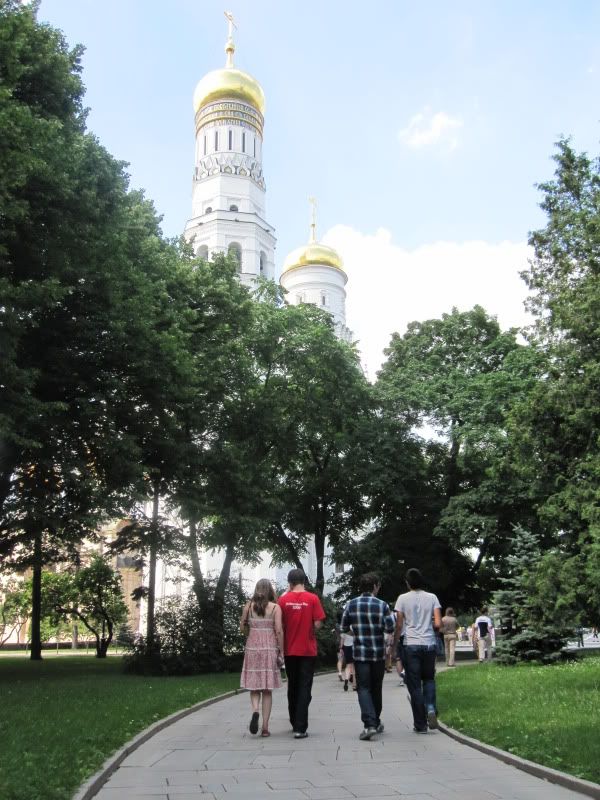
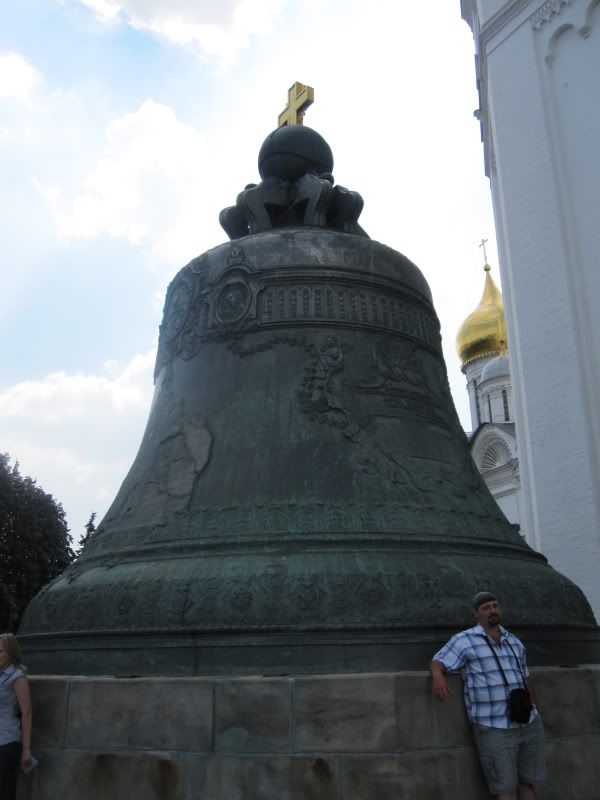
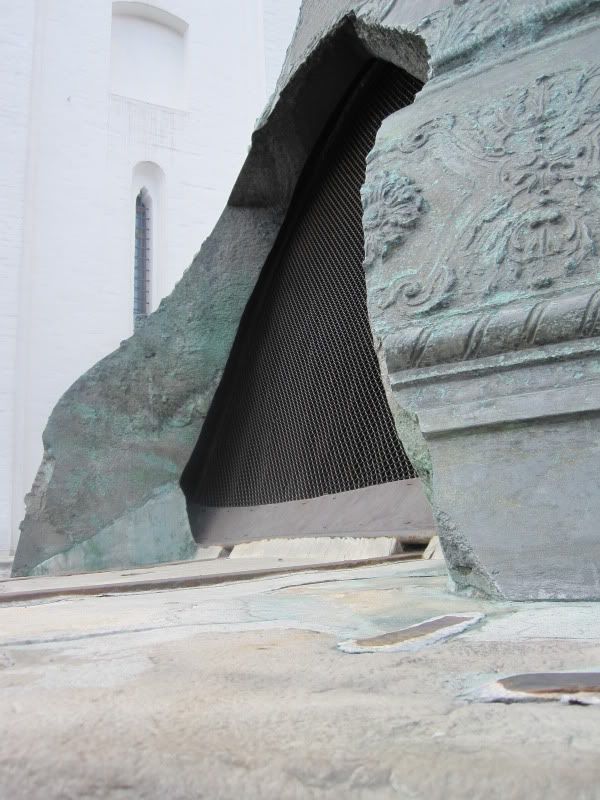
(Note: all photos in this post were taken by me when I visited the Kremlin in July 2010. Click to see larger versions.)

Taking a break from researching/writing a speech about the American justice system for the Yale Political Union's Gardner-White Prize Debate on R: Bring back the stocks tonight. In between skimming Gresham Sykes's The Society of Captives and wading through the Bureau of Justice Statistics's Survey of Sexual Violence, I've been going through my music library looking for songs about prisons, criminals, gangs, etc. Of course ended up listening to one of my top five Tom Waits songs, "Hoist that Rag", and a certain line caught my attention in a new way:

(I can never resist posting live performances, but you can hear the studio version, which is brilliant and perhaps more palatable to less seasoned Waits fans, here.)
"Well, we stick our fingers in the ground,
heave and turn the world around.
Smoke is blacking out the sun,
at night I pray and clean my gun.
The cracked bell rings as the ghost bird sings;
the gods go begging here.
So just open fire when you hit the shore,
all is fair in love and war."
I've listened to this song probably at least a hundred times, but this time the image of the cracked bell caught me and reminded me of Leonard Cohen's "Anthem" (which I heard for the first time a few weeks ago, courtesy of the Ochlophobist):

"So, ring the bells that still can ring,
forget your perfect offering.
There is a crack in everything,
that's how the light gets in."
New Haven, where I've lived for nigh four years now, is full of the noise of bells, from the widely hated carillon in Harkness Tower to the more modest Christ Church bells, rung before Compline on Sundays. Bells have in their call an unnerving mix of the joyful and the ominous, every peal containing within it the calm foreboding of Gust Avrakotos's Zen master in Charlie Wilson's War: we'll see, we'll see, we'll see, yes, yes, we will see.
"The weak sounds of wood and metal remind us of the unclear, mysterious words of the prophets, but the loud and vigorous play of bells is like the rejoicing of the Gospel, radiating out to all corners of the universe and lifting one's thoughts to the angelic trumpets of the last day."
(note: don't have access to the book I got this from at the moment, will cite source later)
"The bell played an important part in material as well as spiritual culture through its technological tie-in with the manufacture of cannon. Already by the late fourteenth century--only a few years after the first appearance of cannon in the West--Russians had begun to manufacture cannon along with bells; and, by the sixteenth century, they had produced the largest of each item to be found anywhere in the world...
They represent the first example of 'overtaking and surpassing' a superior technology. But they illustrate as well the artificiality of of the accomplishment. For the bell was too large to hang, the cannon too broad to fire."
- James Billington, I&A
Not only was the Tsar'-kolokol (Tsar-bell), as it was called, too large to hang, but it in fact cracked while it was still being cast. During a massive fire in 1737, cool water was thrown onto the bell while in the casting pit to prevent it from melting-- the sudden temperature change left us with the bell you see below.

So then: cracked bells, how do they work (as symbols fraught with theological, historical, and literary significance approaching the self-indulgently gravid in these three distinct, unrelated, and arbitrarily selected contexts)?

First we have this Waitsian image signalling perversion of the natural order, both summoning us to, and heralding our arrival at, the Absurd, the Surreal-- "The Lowside of the Road", as Tom himself might put it (which, incidentally, is also the title Barney Hoskyns chose for his unauthorized TW biography). "Lowside" was released on 1999's Mule Variations, five years before Real Gone and "Hoist that Rag". Think of the darkest, most inscrutable moments in O Brother, Where Art Thou? "Lowside" not only describes that world, but makes us realize we've been there too, and might be there still.
"The moon is red and you're dancin' real slow,
twenty-nine miles left to go.
The chain monkeys help you with your load,
you're rollin over to the lowside of the road."

...

Well the clapper has been ripped out of the bell,
The flapper has been kicked right out of hell.
When the horse whips the man that he rode,
you're rollin over to the lowside of the road."
Again: soundless bells announcing the unexpected, the contrary, the impossible: "the gods go begging here," "the flapper has been kicked right out of hell".

Cohen, despite imploring us to acknowledge our inescapable imperfection, seems to present a much brighter vision, one that echoes in its simplicity and joy the bells of early Rus', or perhaps the end of Gogol's Dead Souls: "Where art thou soaring away to, Russia? Give me the answer! But Russia gives none, save the bell pouring forth marvelous sound..."

But here I think the reality of the Tsar-bell links Cohen and Waits: intended to signal to the world the strength, expertise, and piety of "the New Jerusalem", it was undone by nothing grander than one of the basic elements. It stands both as an impressive monument and a humbling castigation-- it is an absurdity, a paradox, a thing both of beauty and of shame. Like the maimed bells of "Lowside" and "Hoist that Rag", it reminds us that we are in a world beyond our comprehension, and like the one beginning Cohen's "Anthem", it assures us that our feckless, discordant acts of worship are loved nevertheless.

Photo 1: Колокольня Ивана Великого/Ivan the Great Bell Tower
Photo 2: Царь-колокол/Tsar-bell
Photo 3: The giant crack in the Tsar-bell

Tuesday, November 23, 2010

Russians, Banjos, and Cinema Verite, oh my!

If you told me there was a documentary about young Russians with a passion for bluegrass trying to make their way in mid 90s Nashville available for free on hulu, I'd knock back whatever cocktail I'd been nursing and run home to watch it.

Unfortunately, there is such a documentary, and it doesn't quite merit that reaction.

The Ballad of Bering Strait is at its best when treating the absurdity of its subject head on, which, perhaps out of respect for the rotating cast of musicians, it rarely does. The following clip, in which Ilya Toshinsky performs before his music professors on the banjo, is one of the few times the documentary even comes close to acknowledging just how bizarre its subject is:


The rest of the film, unfortunately, feels more like a classed-up reality show that could be about any country act at all. It doesn't help that for whatever reason, the band (Bering Strait) tends toward unbearably bland country pop. Another clip that embodies the let down this film truly was is the final concert, recorded at the Grand Ole Opry itself. Here's their first song, typical of the rest of the stuff on their album:


Not a damn thing distinctive about that, anywhere. See the lead singer, the blonde one? At the beginning of the documentary she had waist length black hair. She shaved her head on a lark and only dyes it in preparation for this concert. Her father was a nuclear scientist who died prematurely because he was among the first to investigate the Chernobyl disaster. Absolutely nothing in her music bespeaks how interesting a person she must be. Maybe aping American top 40 style is marked enough for these people-- in which case the documentary would have done far better to focus more on them in the Russian environment, not the American. But wait, what's this?


(For the uninitiated, that was Porushka-poranya, a fairly traditional, well-known song.) Damn, how much more engaging was that?! The freeness in the vocals, the creativity of the instrumentation, the overall energy present on the stage-- blows that crap they were singing before out of the water, and I don't think I'm saying that just because I'm a fan of Russian folk music. People who make music like that might be interesting subjects for a documentary-- those Shania Twain wannabes earlier? Not so much.

Not to say that the film is entirely without merit- these are Russians, after all, and watching them wax philosophical from time to time proves amusing, and if you're at all interested in the inner workings of the country music biz this wouldn't be a waste of your time. The musicians themselves all speak scarily good English, but much of the Russian that is spoken goes untranslated, which might be frustrating for you non-Russophone viewers.

Overall, not the worst way to spend an hour and a half, but not nearly as quirky or entertaining or culturally thoughtful as it could've been.

Thursday, October 14, 2010

Authenticity is for PostSecret

Cards on the table: I have no idea who reads books like Proud to be Right (though I do get the sense they're not really published to be read- this may explain my frustration with the genre).

I'm not sure what one calls it- I've encountered it often on the right, though it must also exist on the left- self-satisfied collections of essays that vary from the completely inane to the occasionally interesting (in that sort of "I'll tuck that nugget away for a conversation lull later," kinda way), that know they're preaching to the choir from the very beginning, but know also that the choir is probably really big, and also probably old, because let's face it, who reads books anymore, am I right? So not only do they skip the argument/originality part, they limit themselves (usually) to the most basic, widely accepted tropes and attitudes that fall under the umbrella of whatever movement the book is variously trying to speak for/encourage/inspire/prop up. I haven't read Proud to be Right, but everything I've read about it suggests to me very strongly that this is precisely that kind of book, and so, I almost certainly will not.

I won't, except for the one essay I've already read, and which went a long way toward convincing me that this was, indeed, that kind of book: Katherine Miller's essay "Man Up", the majority of which can be read here. It is long(er than a blog post) but says, essentially, what a blog post could, and has: "Men were manly once! They're not anymore! Masculinity is stoicism! Damn this feminization of our culture all to hell! By the way, I'm a woman, and even I'm saying this, so you boys must have really fucked up! Also, the platonic form of masculinity must be determined by what women want."

I can sympathize with Miss Miller. I'm no fan of limp-wristed milksops, and I can forgive an (almost painfully) redundant essay. But something about this line caught my attention:
"Vanity over pride, selfishness over self-restraint--serious problems that can be traced from one to the next, streaks of light in the dark forming one big circuit."
Now I don't know about you, but when I read the phrase "vanity over pride" I didn't think of metrosexuals, I didn't think of hipsters, I didn't think of the Backstreet Boys, or Justin Bieber, or anyone from the 20th, or 21st, centuries at all. Those three words, like some kind of hypnosis-induced trigger, brought before my mind's eye, in rapid succession: Sebastian Flyte, Peter III, Paul I, and the stereotypical image I somewhere acquired of what most Hanoverian kings must have been like ages 7 through 36. I kept reading, and thought of the whiny, needling tone of Prince Kurbsky's epistles (justified though it may have been) and Oblomov's distinctly effete brand of hypochondria (grounded in self-conception as "delicate", rather than basic neurosis). I thought of decadence and decadents throughout culture and history, from the late Severan Dynasty of Ancient Rome to the Karamazov Dynasty of 19th century Russia.

But no, these are new problems.

"Pain + silence = masculine strength" is certainly an old formula, and one that has waxed and waned over time as the be-all, end-all of manliness. Miss Miller proposes we address its current waning by stubbornly invoking some Frankenstein's monster with John Wayne's heavy cadence, Don Draper's emotional repression and Winston Churchill's functional alcoholism. "MAN UP!" we cry, hoping they see what we do when we say it.

Now granted I hate fops- really, I do- but I have to go back to Sebastian Flyte for a moment, because I think he has a better answer. There's a scene early on where Sebastian and Charles are driving together to Brideshead, and Charles is being very inquisitive about the Flytes (for my own convenience I'm referencing the transcript of the 1981 miniseries):
"You're so inquisitive."
"Well, you're so mysterious about them."
"I hoped I was mysterious about everything."
"Why don't you want me to meet your family? Who are you ashamed of, them or me?"
"Don't be so vulgar, Charles."
That! That, there, is the answer.

We cannot attack this issue in such an obviously ethical fashion- confronting someone with their own weakness by contrasting it with strength? Then you have to go through the whole process of convincing them strength is good, which, well, hey, good luck with that.

But rudeness, vulgarity, the making uncomfortable of another- these are concepts that still can have traction, particularly with the apparently eager-to-please set we're currently trying to reform. Don't bring your emotions into things, don't be sincere, don't be open - dude, that's just fuckin' awkward, come on.

Like I said, I hate fops. Few things get under my skin more than obsessive, self-conscious concern for "propriety" and other forms of outdated custom that inevitably manifest themselves in feeble attempts to revive some long-dead idea of the bourgeois lady or gentleman (I ain't exactly what you'd call a classy dame myself), and so I recognize that this theoretical solution largely serves only to perpetuate the disease, at best treating the symptom, and at worst, possibly exacerbating it.

I do think there's something inherently valuable, however, in re-establishing revelation of vulnerability as a rare and privileged act, and I know that conceiving of emotional displays as sources of embarrassment, rather than signs of weakness, is a much easier and more natural sell.