Friday, April 15, 2011

Yes, my subconscious bred Tony Bourdain and Michael Tanner, deal with it

Last night, I had a dream that I was in some kind of 24 hour McDonald's, where a man I didn't know approached me and told me, unprompted, that my blog reminded him of a) the writings of some famous Catholic mystic zookeeper (completely invented by my brain) and b) First Things.

I told him that I was flattered (I was).

The (again, nonexistent) Catholic mystic zookeeper theologian looked kind of like the handsome version of the bastard child of Tony Bourdain and Michael Tanner.

Also: all Catholics have facial hair in my dreams, apparently.

This is what I get for drinking so much at last night's debate on R: Philosophy is Preparation for Death.

Tuesday, April 5, 2011

Blessed are those that mourn

Tonight was the Yale Political Union's annual Party Prize Debate, in which all seven parties field two speakers, one in the affirmative and one in the negative (each with a four minute time limit, against which I chafed mightily!). I with my cohort Miss Camila Francisca YaDeau took second place. The following is the text of my speech, more or less as delivered, in the negative on R: Don't fear the Reaper.
- - - - -
Mr Speaker, it must be strange for this body to see a heavy smoking, hard drinking degenerate such as myself rise to speak in the negative of tonight's resolution-- how can such a reckless, unthinking soul renowned (if anything) for the inability to think beyond the butt of a cigarette stand here urging an all-consuming fear of death?

I stand here, Mr Speaker, because it is to fear that I owe not my life, but my humanity-- because it is fear that begets mourning, mourning that begets gratitude, and gratitude that begets love.

Let me begin by examining what fear is not. Despite what some in the affirmative have said, fear is not ignorance, avoidance, or paralysis, nor must fear inevitably lead to cowardice. In fact, fear is the very foundation of all that makes life worth living-- the foundation, because, to misquote Bob Dylan, fear is not the end.

Ultimately, fear is the thing that grips us when we are confronted with our own insufficiency. We not only fear the unconquerable, we fear because the unconquerable exists-- it may find us as a cocked gun, an unpaid bill, a lover's quarrel-- but however it manifests, fear is what takes hold when we find ourselves not only vulnerable, but suddenly so. Fear is absence of control, wildly and horrifically felt.

Fear of death is unique because death alone is at once completely universal, and completely inevitable. Modern man speaks often of equality yet rejects this, its final, perfect, manifestation.

Contemplation and fear of death confront us with our imperfectability, a confrontation modernity has furiously sought to rationalize away. If man, here, now, is perfectable, why would he approach the inescapable with trepidation? To do so would be nothing less than childish, self-indulgent, and wasteful. Stoicism, ignorance, and even preoccupation with longevity are permitted, but protesting things as they are, and indeed as they must be, is nothing less than a petulant temper tantrum.

I say “protest” because, properly understood, that is what fear is-- protest: a yearning for some circumstance, some reality, other than this. Courage is not the absence of fear, but the fullness of it.

In the words of an anonymous desert father: “A man who keeps death before his eyes at all times will overcome his cowardliness.” Fear and courage before death are above all futile protests, because we can neither rid ourselves of this imperfection, nor ignore it, nor accept it. Fear before death is a doomed protest, but protest we must.

Mere contemplation of death may remind us of all we have left undone, sharpen our regret, and even help us to know a more honest ranking of our priorities, whether we realize we wish we'd had more sex or read more books, but only fear of death can inspire in us the urgency to live in the radical now, and only fear of death, visceral, unconquerable, absurd, binds us to these truths when reason would protect us with the frankly statistical truth that, even for we young smokers, we still have time.

This is what I mean when I say that 'fear is not the end'-- fear of death must be transfigured-- neither ignored nor forgotten, but made into something greater than itself. To misappropriate Father Alexander Schmemann, we must find a “third way” between “the radical yes” of surrender (in this case, unthinking hedonism) and “the radical no” of escape (obsession with longevity).

Death is inevitable, but still must we fear, so that we can know the urgency necessary to accomplish. Still must we mourn, so that we can fully feel and acknowledge the goodness of life. Still must we be grateful for the time we have had and the time we have yet. To do otherwise, to embrace the self as perfectable, complete, radically free, self-created and self-defined, is to limit one's interactions with others either to exploitation or conquest.

Fear of death must lead to mourning and grief before eternal rest, but the final stage, contra Dr Kubler-Ross, cannot be acceptance. We must fear death, we must know urgency, we must embrace finitude, not to find peace, but to know fire, not to die unto the world, but to live within and beyond it, not to reject others, but to love. Ladies and gentlemen, there is no joy without gratitude, no gratitude without loss, no loss without sorrow, and no sorrow without fear. Fear the Reaper, and conquer him with love.
- - - - -
At least ten pages of tightly written notes musing on everything from the Seven Sorrows to Turgenev's The Living Relic to antinomianism to Svevo's La conscienza di Zeno (and everything between, and much without), went into this speech, so expect further elaboration. If there's a particular place you'd like me to begin, do let me know. I'm very gratified to have been able to give a speech I actually believe (rare for a prize debate), and so despite not taking first place I am grateful (for once) to the YPU for giving me the opportunity to really exercise my philosophical chops.

Many congratulations to the first place winner the Party of the Left, represented by Leah (of Unequally Yoked, who else) and Mr Adam Stempel.

Thursday, March 31, 2011

But one day, the mask will sink into the temporal lobes

Misheard Sinatra's "I Guess I'll Have to Change My Plan" as "I Guess I'll Have to Change My Brand", assuming it was a song about changing cigarette brands post-break up.

Tuesday, March 29, 2011

In a world full of people, only some want to fly, isn't THAT crazy?

Leah writes:
"Plenty of my Christian friends subscribe to theologies that strongly imply I will go to hell when I die, but they don't feel compelled to evangelize to me, and, if pressed on the point, tend to adopt a somewhat wishy-washy position ('I can't know what God will do') or just wave their hands and say 'I guess the Church teaches you're going to Hell, but I don't think I can do anything about it. It's up to God.'"
This, combined with Elizabeth Scalia's recent post about the relationship between faith and reason, have prompted me to delve more deeply into my crypto-fideism. Fair warning: Waits's "Lowside of the Road" is a pretty good picture of my mental landscape on this topic, so fasten your seatbelt.

Conversations about ethics bore me. Increasingly, I find them not only boring, but unilluminating, and often even counter-productive. This is because I think it is impossible to conceive of morality in terms of laws. I really liked Simcha Fisher's post on the difficulty of discerning when natural family planning is appropriate because I think it gets at why the hyper-legalistic approach is untenable, cruel, absurd, and even contrary to the Christian conception of man and his relationship to God: "But why doesn’t the Church give some specific examples of what qualifies as a just reason? Well, one problem is that my just reason is not necessarily the same as your just reason. ...if the Church seems distressingly vague, it’s because she doesn’t want to get in the way of the conversation you could be having with God. He doesn’t want to talk to The Church as a whole: He wants to talk to you."

This may strike some as getting perilously close to relativism, or at least some kind of very low church protestantism-- if you forget that Christianity is first and foremost about the Christian's relationship with Christ. He, not the Church, not the Ten Commandments, not the Golden Rule, is "the Way and the Truth and the Life". Every relationship man has is unique-- our love for each other in every instance manifests differently, and Christ, being human, is no different. I think this is because only in perfection is there true unity and oneness, and man while on earth is inescapably imperfect. Our imperfection necessarily fractures all of us in different ways, and the variety in magnitude and diversity of the fractures demand different bonds to repair us and bring us closer to one another and to Him.

We need a Church because we are so confused and broken that we cannot simply look upon Christ and know the Truth. The Church helps us to know those who are perhaps less fractured, or fractured differently, so that we can begin the infinite and difficult process of mending ourselves. I think seeking directly and radically to emulate Christ in all things is a fool's errand-- we cannot ignore His Divinity. It's sort of like the novice monk doing 500 prostrations a day, or trying to subsist on nothing but locusts and the rain. He hasn't worked his way up to that level of ascesis, he can't be trusted, or expected, to understand it, and in so trying he perverts the practice and ends up worse off than when he started. The first time I read The Brothers Karamazov it pushed me from agnosticism to atheism because I was 12 years old and clearly not ready for it. If you try to lift a hundred pound weight and in so doing injure yourself, you won't even be able to lift twenty.

So we have priests and bishops and patriarchs and monks and saints to help us along, because the sun blinds while the moon illuminates the contours of the desert in the night. Ethics as law make no sense to me because the ethical isn't a list of dos and don'ts, and morality exists nowhere in Big Book of Truth form. The function of ethics is to help me better know how to approach and understand myself.

The first example that comes to mind is when I read somewhere earlier that "God will do what seems repugnant to the world." This is a common sentiment in Christianity-- the Christian ought not be of the world, he ought reject the world, etc. But how much of the world am I? How do I discern what seems repugnant to me because I am fallen and what seems repugnant because of the grace given me by God? I can't bend my will and my desires to the Good-- to Him-- before I actually confront and examine what my will and my desires are.

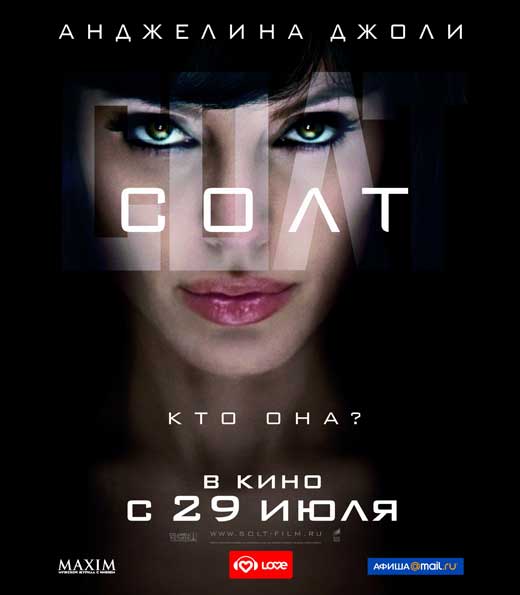
His law may be written on my heart but I wasn't born literate. Put another way: you can show an American and a Russian the same movie poster, but the former sees "Coat" and the latter "Salt" because they're reading the same symbols as parts of their own alphabets-- and only one of them is reading it as intended.


It's easy to list the virtues and incredibly hard to know how to live them, even if one sincerely wants to (which, really, most of us don't, most of the time). I struggle to know what God wants or expects of me on a day to day basis, so how could I ever presume to know anything about His relationship with anyone else, especially His relationship with someone who doesn't yet acknowledge His existence?
"Thou, simple, ignorant, and humble Russia, stay faithful to the plain, naive gospel wherein eternal life is found, and not the phrase-mongering Aristotle or the obscurity of pagan sciences. Why set up Latin and Polish schools? We have not had them up to now and that has not kept us from being saved!" 
- Ivan Vyshensky, 17th century Ukrainian elder
A lot of the questions I get asked about Christianity seem to boil down to a bizarre kind of absolutism-- most of the conversations end with a "what happens if?" "What happens if the fast is broken?" "What happens if someone throws an icon away?" "What happens if you don't cross yourself?" Perhaps I'm misreading my friends, but they always seem to be looking for a line that, once crossed, will definitively send one to Hell, and if a particular behavior doesn't, they can't seem to understand why it's relevant. I chalk this up, too, to the inability to understand Christianity not as a system but as a relationship. What happens if I don't bum my friend a cigarette? What happens if I forget his birthday? What happens if I steal from him? A friendship can survive many transgressions. That doesn't mean we shouldn't avoid them.

That said the unending chorus of "why" and my own profound ignorance has pushed me into a corner. If I uncharitably interpret Tolstoy to a friend who's never read him, perhaps that friend never reads War and Peace. Uunfortunate, but not life threatening. If I mangle an aspect of theology, whether it's something minor, like why shrimp are acceptable Lenten fare, or something essential, like the role of the Eucharist in salvation, I may push someone farther away from conversion than if I'd said nothing at all.

Thus my crypto-fideism stemmed partly from fear, partly from cowardice (these are distinct), and partly from the sentiment voiced in the Vyshensky quote above. But now I see that sentiment as affirming a different sort of absolutism-- certainly many were saved before Aquinas and Augustine and Schmemann and Lossky and even Chrysostom and Irenaeus, but how are we in any way the worse for having them? If there is progress in history it is because of men such as they.
"There is a paradox at work, of course; we apply our reason to what is founded upon unreasonableness (and faith is utterly unreasonable; it is 'the substance of things hoped for, the evidence of things not seen) and then our understanding—slowly hatched open bit by bit, by our own Holy Spirit-prompted willingness to pursue the gift through the giftedness of all who came before—leads us to the point where we can say not only 'I believe this,' but 'I know this in a way that has passed through my intellect, and been absorbed within my tissue,' in the same way that you can say you know how to button your coat, or put a car into forward or reverse: not because you are mindless, but because you have fully absorbed that learning. 
And then you really can be fearless..."
That (from the Scalia post mentioned above), really, is the heart of it for me, and the strongest objection to fideism, crypto or otherwise, I see. Faith independent of reason I think is inextricably bound by fear, especially in the modern world so awash in skepticism and unbound inquiry. It may be true, as Don Colacho says, that "there are many things of which one cannot speak without automatically disfiguring them," and certainly the words of Saint Gregory Nazianzen are worth remembering when he says "not to every one, my friends, does it belong to philosophize about God; not to every one; the Subject is not so cheap and low; and I will add, not before every audience, nor at all times, nor on all points; but on certain occasions, and before certain persons, and within certain limits," but the alternative can't be total silence.

I'm not suggesting theological inquiry or apologetics as a crutch to let us escape the bidding to "preach the gospel at all times, and if necessary, use words," which is certainly a danger, but unwillingness to engage non-Christians on intellectual questions, and unwillingness to prepare for them, strikes me as unfair and even cruel.

So to return to Leah's paragraph above: no, I don't know what God will do, and yes, it is up to Him, and I think she knows that any Christian who says otherwise is probably at the very least confused. But Christianity is, I think, anything but fatalist. To quote the good Don yet again: "The true Christian should not resign himself to the inevitable: he should trust in the impertinence of a repeated prayer." Here again I really like the way Scalia puts it: "the prayer part is absolutely essential, because that is where what you are learning becomes bone-deep; it is the 'setting agent,' as it were."

"I don't know" is a terrifying admission because "on behalf of all and for all" is a terrifying prospect. It's also why every admission of ignorance must be turned from an end into a beginning.

Saturday, March 26, 2011

The Sieve: Black Lamb and Grey Falcon II

I've written about Rebecca West's wonderful Black Lamb and Grey Falcon before, and as I get farther in it seems only to improve. While I'm barely a tenth into the 1200 page work, the last chapter of the section on Croatia ("Zagreb VII") will certainly rank highly among my favorites when all is said and done. There's much to chew on in its scant eight pages, but I'll begin with this passage, which touches beautifully on melodrama, farce, the self-seriousness demanded by the juxtaposition of peasant and bourgeoisie, and dog shit. Here Rebecca, her husband (English both), and their Serb guide Constantine are visiting the family of the Croat journalist Grigorievitch:
"'Ah! Ah! Ah! cried Constantine, pointing his forefinger. We all wheeled about and saw that the poodle was relieving itself on the carpet. ... Grigorievitch and his wife started forward with tragic faces...
The dog was put out into the passage: but the incident could not be considered as ended. There remained in the middle of the carpet the results of its protest. We endeavoured to take the matter lightly, but we found that the Grigorievitches were evidently hurt by our frivolity; it was as if we had chanced to be with them when a son of theirs has returned home drunk or wearing the badge of the Croat Separatist Party, and we had tried to tamper with the horror of the moment by laughter. The atmosphere was tense beyond bearing; so Constantine, who had assumed an air of gravity, walked to the piano in the manner of an official taking charge in an emergency, and played a majestic motet by Bach, which recognizes the fact of tragedy and examines it in the light of an intuitive certainty that the universe will ultimately be found to be reasonable. The Grigorievitches, who had sunk into two armchairs facing each other, sat with their arms and legs immensely extended before them, nodding their heads to the music and showing signs of deriving sober comfort from its message. There entered presently with a brush and dust-pan an elderly servant, in peasant costume, who was grinning from ear to ear at the joke the dog's nature had played on the gentry.
As she proceeded with her task Constantine passed into the calmer and less transcendental music of a Mozart sonata, suitable to the re-establishment of an earthly decorum; and when she had left the room he played a brief triumphal passage from Handel and then rose from the piano. Madame Grigorievitch bowed to him, as if to thank him for having handled a social catastrophe with the tact of a true gentleman, and he acknowledged the bow very much as Heine would have done. ... Meanwhile her husband took mine aside, ostensibly to show him a fine print representing the death of an early Croatian king, but really to murmur in a voice hoarse with resentment that he had owned both the poodle's father and grandmother, and that neither of them would ever have dreamed of behaving in such a way. 'Nothing, man or beast, is as it was. Our ideals, think what has happened to our ideals... what has happened to our patriots...'"
Yes, mesdames et messieurs, among the Slavs, even the fecal is the political.

Friday, March 25, 2011

We have always been at war with Soviet Realism

My Ear-Trumpet Has Been Struck By Lightning never fails to fascinate, and if I blogged about every post that caught my eye this would cease to be a crypto Waits commentary blog and become a crypto Ear-Trumpet commentary blog. That said, I couldn't let his recent posting of an Abel Grimmer painting slip by unnoticed:
"Carrying the Cross" - Abel Grimmer, 16th century
Abel Grimmer was 16th/17th century painter of the Flemish baroque school. Don't worry, I'm not suddenly expanding the roster of countries with which I'm obsessed to include Belgium-- this painting struck me because its use of perspective reminded me vaguely of some early Muscovian manuscripts (yes, yes, EDISPD).
The Kremlin, 16th century
Crowds implore Mikhail Romanov's mother to let him to go Moscow and become Tsar (really), 17th century
Construction of the Kremlin, 16th century
Boy, the perspective looks screwy! Contrary to popular belief, this is not because the early Russians were subhuman gold-worshipping bear-eating creatures incapable of discerning shadow from light or near from far. As it was told to me, at least, early Russian manuscripts portrayed people and places in proportion to their importance to the scene. Surprisingly ten minutes of Google image searching didn't yield up ideal examples of 16th century depictions of Uspenskiy Sobor, but if you're ever lucky enough to come across such things, you'll note that the religious buildings are always larger than the secular ones surrounding it, and that the important people (Patriarchs, Tsars, Saints) are larger than the random boyars and whatnot surrounding them. Conscious rejection of realism! How neat.

Tuesday, March 22, 2011

Dr Bernice - Cracker


Baby don't you drive around with Dr. Bernice
She's not a lady doctor at all
She's got hands like a man, with hair on the back
She'll crush you with her embrace


Though the wind may whisper and moan sometimes
We all need a kind place to live
Though the wind may whisper and howl at your door
We all need the comfort of friends


Baby don't you drive around with Dr. Bernice
That ain't a real Cadillac
It's a Delta '88 spray painted black
With fake leather seats from Juarez


Though the wind may whisper and moan sometimes
On a hot desert night it is still
Though the wind may whisper and howl at your door
You're not obliged to let them all in


Baby don't you ride in that faux Cadillac
If you must please ride in the back
If you sing while you ride you'll be a siren tonight
Spare this poor sailor's life from the rocks


Though the wind may whisper a melody now
We can't find a tune of our own
Though the world may whisper and blow in your face
And tangle the hair on your head


On a hot desert night we can drive down the road
And the stars will spell out your name
On a hot desert night with the windows down wide
The sirens, they'll sing me their song


And the ghosts of the sailors who died on the rocks
They feel not a twinge of regret
Though the wind may tangle the hair on your head
You sing like a siren to me


On a hot desert night the caravan stops
At the oasis, it's next to your heart
The soundtrack is played by some aged British queen
On BBC Radio One


Though the wind may whisper an epic sometimes
the cast must include Karen Black
Though the symphony strings, they shifts with the sand
You sing like a siren to me


You sing like a siren to me